








24 Oct Ultimate Guide to Stone Look Waterproof Wall Panels
If you’ve ever walked into a room that looks great but sounds hollow or echoey, you know how much sound affects comfort. Now throw moisture into the mix from hot showers, cooking steam, or just humid weather, and you’ve got another problem to solve. Walls in modern homes need to do more than look good. They need to actually work.
That’s where stone-look waterproof and acoustic wall panels come in. These panels give you the realistic texture of stone while using hybrid technology that blocks moisture and softens noise at the same time. What you end up with is a space that feels calm, looks luxurious, and holds up well for years.
If you’re looking for other types of acoustic wall panels, check out our ultimate guide here!
What are Stone Look Waterproof & Acoustic Wall Panels?
These panels are made from hybrid composite materials: a mix of stone fibres, natural minerals, and thermoplastics that create a surface that’s both strong and waterproof. The exterior features a stone-textured or printed finish that looks just like marble, concrete, or travertine, while the inner layers are engineered to resist moisture and absorb sound.
Unlike tiles, there’s no grout, no sealing, and no worry about mould or cracks forming over time. And because of their built-in acoustic design, they don’t just handle water; they make your space quieter and more peaceful too.
Why Are More Homeowners Are Choosing Hybrid Panels?
Hybrid wall panels have quickly become the modern alternative to tiles or stone cladding. They’re practical, cost-effective, and stylish.
In busy homes, they help keep bathrooms, kitchens, and laundries low-maintenance, meaning no grout lines to scrub and no water seeping behind the wall. In offices or commercial spaces, they reduce echo and create a more professional, calm environment for conversations or meetings.
Essentially, hybrid wall panels give you the look of stone, the feel of silence, and the peace of mind of waterproofing all in one product.
The Pros of Stone Look Hybrid Panels

1. 100% Waterproof
This is their biggest strength. Unlike timber slats that can warp or foam panels that break down with humidity, hybrid panels actually thrive in wet areas. They work perfectly in showers, splashbacks, laundries, and commercial washrooms.
2. Strong & Impact-Resistant
The rigid composite structure makes these panels much tougher than painted drywall or MDF. They handle scratches and small impacts well, which is useful in high-traffic spots like kitchens or offices.
3. Realistic Stone Aesthetics
Hybrid panels capture the look of real stone through high-resolution printing and textured surfaces. Whether you want matte concrete or polished marble, you get high-end aesthetics without the maintenance hassles.
4. Low-Maintenance & Easy to Clean
No grout means no mould. You can wipe them clean with a damp cloth. No sealing or scrubbing required.
5. Fast, Cost-Effective Installation
They click or slot together with interlocking joints. There’s no tile adhesive, no grout, and minimal disruption. A qualified installer can finish a bathroom in a fraction of the time it takes to tile.
6. Mild Acoustic Performance
Hybrid panels absorb some mid-to-high frequency sounds, which reduces harsh echoes in bathrooms, kitchens, or laundries. It’s not studio-level acoustics, but it does noticeably soften the space.
The Cons of Stone Look Hybrid Panels

Even with all those strengths, hybrid panels aren’t perfect. Here’s where they might not measure up compared to other acoustic solutions.
1. Acoustic Depth
While hybrid panels absorb some reflections, they’re not as acoustically advanced as timber slat panels.
Timber slat panels use layered felt and MDF cores to capture a wider range of frequencies, including lower tones. That makes them better for living rooms, offices, and home theatres.
So if your goal is to actually transform how a room sounds, rather than just cut down on echo, timber panels might be the smarter choice.
2. Texture & Warmth
Hybrid panels look good, but they don’t have the natural warmth of timber. Timber slat panels bring character and depth that synthetics just can’t match. They’re ideal for spaces where ambience matters as much as practicality.
In these situations, timber slat panels or a differently textured hybrid panel might be a better fit.
3. Sunlight Sensitivity
The printed stone surface can fade a bit under strong, direct UV light over time. If you’re installing near a large window or skylight, timber or painted acoustic options might hold their colour better.
4. Repair & Customisation
If a hybrid panel gets damaged, you often need to replace the whole section to keep it looking seamless. Timber or foam can be sanded, refinished, or replaced in smaller sections more easily.
Ideal Spaces for Hybrid Wall Panels

Hybrid panels are designed for places where moisture meets sound:
-
Bathrooms: In showers or behind vanities, they prevent water damage and quiet down echoey spaces.
-
Kitchens: Perfect as splashbacks or full-height features – stylish, durable, and easy to clean.
-
Laundries: Protects against humidity and water splashes while keeping the room calm and quiet.
-
Commercial fit-outs: Great for cafes, offices, and reception areas where design and durability both matter.
If your space is dry and aesthetics-driven, timber or foam might add more warmth and acoustic control. But if water is part of your daily routine, hybrid panels win every time.
Design & Styling Tips

Hybrid panels give you room to play with tone and texture. Some ideas:
-
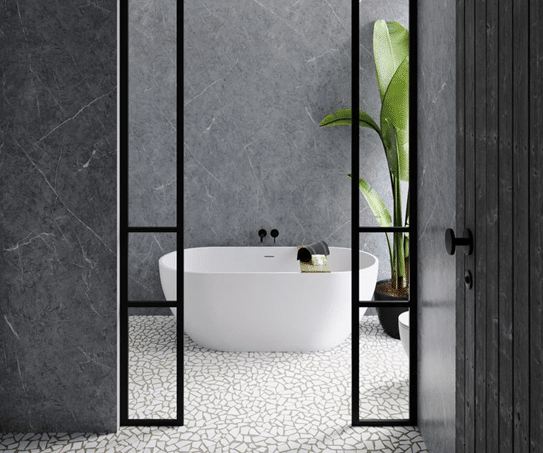
Marble-look white or grey for a spa-inspired bathroom.
-
Textured concrete-look behind a matte black vanity for modern contrast.
-
Sandstone or travertine finishes to warm up bright kitchens or coastal homes.
Because they’re lighter than real stone, hybrids can be installed on ceilings or accent areas that tiles can’t handle safely. For other types of waterproof wall panels, see our guide here!
Installation & Care
While hybrid panels are designed for easy installation, the difference between “looks good” and “lasts decades” often comes down to how well the panels are sealed and fitted. Even the best materials can underperform if the joins aren’t watertight, especially in bathrooms and laundries where water exposure is constant.
That’s why we recommend having your wall panels installed by a FloorVenue professional contractor. Our installers specialise in hybrid and acoustic systems and understand exactly how to achieve a 100% waterproof seal across every join, corner, and edge. From preparation to finishing touches, they follow precise methods to ensure your panels are both acoustically balanced and fully protected from moisture.
A few advantages of choosing FloorVenue for your installation:
-
Guaranteed waterproof finish – no gaps, no leaks, no hidden damage.
-
Expert alignment and clean joinery for seamless stone-look walls.
-
Peace of mind knowing your panels meet manufacturer and building standards.
So while hybrid panels can be installed DIY, professional installation through FloorVenue ensures your investment looks beautiful, performs flawlessly, and stays completely watertight for years to come.
Contact FloorVenue today to book a consultation or quote with our experienced installation team.
Final Thoughts
Stone-look waterproof and acoustic wall panels hit a smart middle ground between style, sound, and practicality. They’re the best option for wet or humid spaces where you still want acoustic comfort and visual appeal.
That said, if you’re after luxury warmth or top-tier sound absorption, timber slat panels might be more your speed. And if sound performance is the priority and budget matters, foam acoustic panels are still a solid choice.
Each type has its place. It’s really about matching the right solution to the right space.
If you’re not sure which one suits your needs, reach out to FloorVenue. Our team can show you samples, explain sound profiles, and go through waterproofing options to help you find the right balance of style, comfort, and function for your space.
